| |
| Wednesday, 16 September 2026 |
| Curves, Colours & Cool: An Introduction to Mid-Century Modern |
| Mark Hill |
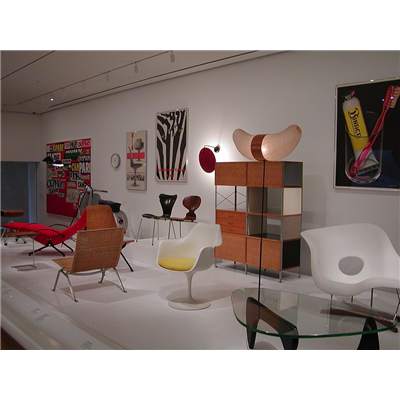 |
This lecture will follow our AGM which starts at 10:20 The antiques market has changed dramatically and now pieces that were made during the 1970s can fetch many times more than a piece made in the 1770s. Why has the teak sideboard you threw out become so desirable? Who is this Eames guy? Drawing a blank with Timo Sarpaneva? Who’s buying what and what are they doing with it? Focusing on Scandinavia, Italy, America and Great Britain, this practical and inspirational lecture looks at furniture, ceramics, glass, lighting and metalware, identifies key designs and designers, and the examines the revolutionary design movements they began. Mark Hill is an author, publisher, TV presenter, and the leading specialist dealer in postwar Czechoslovakian glass. He has been an expert on the BBC Antiques Roadshow since 2007, and co-presented four primetime TV shows on antiques, collecting and interiors for BBC2, including two series of Collectaholics. Mark lectures widely and is an Arts Society (NADFAS) accredited lecturer, a member of The British Antiques Dealers’ Association, and a Freeman of the City of London. Chairs on display at MOMA in New York City.
Attribution: user:Petri Krohn, CC BY-SA 3.0, via Wikimedia Commons |
|
| Wednesday, 21 October 2026 |
| The Pre-Raphaelite Brotherhood |
| Val Woodgate |
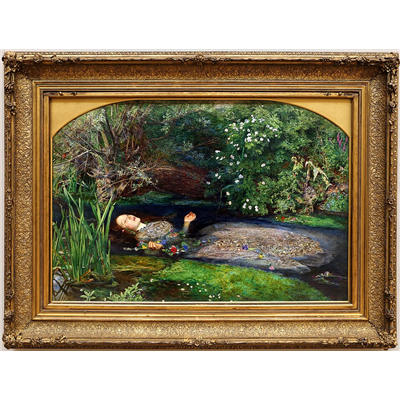 |
In 1848 a group of young artists got together to form a secret society which they called The Pre-Raphaelite Brotherhood. They wanted to establish a new kind of art based on serious subject matter and the painstaking study of nature. Holman Hunt said, “... our talk is deepest treason against our betters.” As proof of this, their early works in the new style provoked a storm of hostile criticism. A few years later, however, works by the Pre-Raphaelites were to be among the most popular exhibits at the Royal Academy. This lecture will make clear the reasons why the Pre-Raphaelites felt that art was in need of reform, how their art was different from the popular art of the day, the reasons for the criticisms of the group and for their gradual rise to fame and acceptance. Val Woodgate is a lecturer and guide at Tate Britain and Tate Modern, also at many other London Galleries and for various art organisations. She is a former member of the teaching team at Dulwich Picture Gallery.
She is also a lecturer to The Arts Society (formerly NADFAS) throughout Britain, and to related organisations in Europe, Australia, New Zealand and South Africa. Lecturer and runs courses at the Pallant House Gallery, Chichester. Ophelia by John Everett Millais 1851 Tate Britain Collection
John Everett Millais, CC BY 3.0, via Wikimedia Commons |
|
| Wednesday, 18 November 2026 |
| A Yorkshire Textile Renaissance:
Tom Heron, Cryséde and Cresta at the birth of Modernism
|
| Ashley Gray |
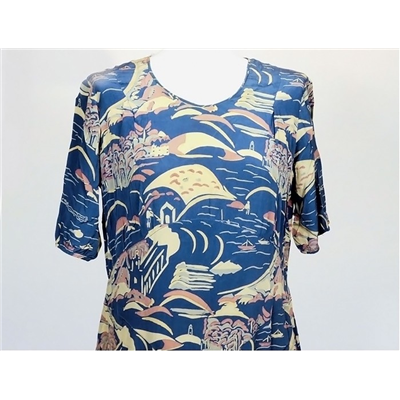 |
An epic tale of two extraordinary figures from the same valley in Yorkshire who were destined to change the world of fashion and design for all time. A story that takes us from the mills of Yorkshire in the 1920s to the coast of Cornwall. From Welwyn Garden City to the corridors of power at Westminster.
Art, design, textiles, fashion, politics, publishing, philosophy, and the very genesis of modern art in Britain. This lecture tells the story of creativity, determination, passion, and resilience of a true textile Maverik. Ashley Gray is a leading specialist and curator in Modern Textiles and their history. He is regularly invited to lecture on the subject both in the UK and the US and sits on the advisory board of The Frances Neady Collection at FIT, New York. As a curator and archivist, he works with institutions and foundations on many major conservation and exhibition projects He also curates the acclaimed exhibition Styled by Design that celebrates the innovation of Modernist textile design alongside a comprehensive lecture programme that accompanies the exhibitions. Image courtesy of Ashley Grey |
|
| Wednesday, 16 December 2026 |
| The Twelve Plants of Christmas
The Natural History, Botany, and Folklore of The Plants That Surround Us at Christmas |
| Timothy Walker |
 |
This is a very personal take of the plants that feature in the celebration of Christmas as well as those plants that turn up in the Bible account of the birth of Jesus. Apart from the pear tree in which sat the partridge, there are no plants in the 12 days of Christmas according to the folk song. Sadly, even that reference is erroneous, because partridges are ground dwelling birds. And yet at Christmas we are surrounded by plants. This talk puts the record straight and rewrites the plant-blind zoocentric song replacing partridges with poinsettias, and maids with mistletoe. Timothy Walker gave us a lecture about the Oxford Botanic Garden in June 2021 and about Colour in Garden Design in October 2024 and never fails to entertain us. He writes:
"From 1988 to 2014 I was the Director of the University of Oxford Botanic Garden. Botanic gardens are often described as living museums, and garden curators lecture about them in the same way as museum curators talk about their collections. Gardens are often thought of a place where science and art meet on equal terms and my lectures often investigate this relationship. Since 2014 I have been a college lecturer and tutor in Botany and Plant Conservation at Somerville College Oxford and I now hold similar positions at Pembroke, Hertford, and Worcester College." Image shows a red Poinsettia (Euphorbia pulcherrima).
André Karwath aka Aka, CC BY-SA 2.5, via Wikimedia Commons |
|
| Wednesday, 20 January 2027 |
| E. H. Shepard’s War |
| James Campbell |
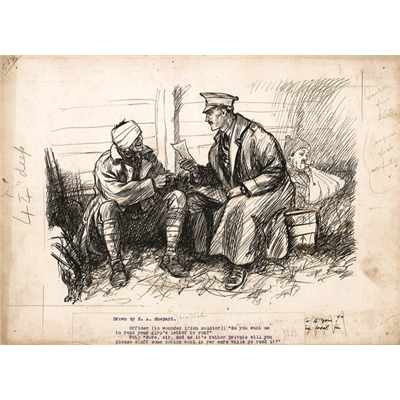 |
Examining E.H. Shepard’s artistic journey through the First World War from jocular cartoons in Punch as a civilian, to dark and impactful images of death and destruction on the western front, and how his own artistic style and approach changed and was influenced by the conflict. It shows a range of cartoons, drawings watercolours, annotated maps and guides for the Intelligence Corps, as well as commercial work for the home market. We see a transition towards the simple economy of line and expression which is exemplified by the Winnie-the-Pooh illustrations started shortly after the end of the conflict. James Campbell has a BA in History and an MA in the History of Art and a particular interest in the work of the artist, illustrator and cartoonist E H Shepard (1879-1976). He has been lecturing for over twenty years, and has lectured across the UK and overseas to Literary Festivals, Art Societies, military museums, and to private clubs and community groups. He has been a Trustee of the E H Shepard Estate since 2010, as was involved in the ground-breaking Victoria and Albert Museum 2017 Exhibition marking the 90th birthday of Winnie-the-Pooh. His books Shepard’s War and The Art of Winnie-the-Pooh were published in 2015 and 2017 respectively. His new joint biography of A A Milne and E H Shepard - The Men Who Created Winne-the-Pooh: The Lives of A A Milne and E H Shepard - commissioned for the centenary of the Winnie-the-Pooh books was published in September 2024 by Michael O'Mara Books. Illustration © The Shepard Trust, 1915, from The Shepard Trust Archive, University of Surrey. |
|
| Wednesday, 17 February 2027 |
| Death by Wallpaper:
Colourful Stories of Chemical Pigments and Dyes |
| Lynne Gibson |
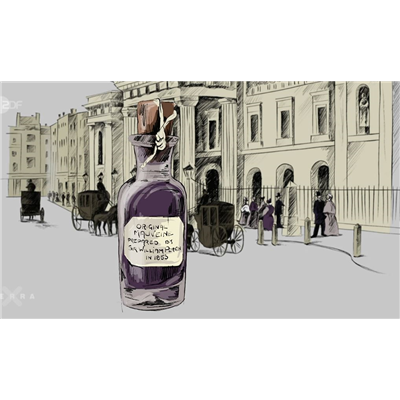 |
Was Napoleon killed by his wallpaper? This story begins in 1775 with a German chemist and his experiments with arsenic. The resulting powerful green reached its height of popularity when worn by "Queen of Fashion", Empress Eugénie. It was printed on wallpaper by Morris & Co. and was a favourite of plein-air artists, such as Monet, Cézanne and Vincent van Gogh, keen to capture the freshness of nature. But a century later, it was rebranded as rat-poison.
In 1856 a chemistry student took home a school project to make synthetic quinine. He failed his homework, but accidentally invented a vibrant purple dye. Queen Victoria and Empress Eugénie wore dresses in the season’s must-have shade. Punch magazine dubbed the craze: “the mauve measles”!
Scheele’s Green and Perkins’ Mauveine were forerunners of hundreds of synthetic dyes and pigments. You will hear fascinating stories – of serendipitous discoveries, industrial enterprise, and some very sinister secrets. Lynne Gibson, now working as a freelance lecturer in the History of Art, originally trained as a fine artist and has taught painting, drawing and printmaking in higher and adult education. She lectured as an art historian for the universities of Sussex and Bristol where she introduced 'Understanding Art' to the Lifelong Learning programme and residential summer schools. Gives talks, lectures and guided tours to a wide range of organisations and institutions including ARCA colleges, the National Trust, National Gallery, art museums and art societies. She has worked as a professional artist specialising in oil painting and etching. Solo and group shows have included the RWA, British Museum and the Barbican. Illustration attribution: ZDF/Terra X/T. Schrader/J. Köster/F. Steinhardt/moods in pictures/Maximilian Mohr, CC BY 4.0, via Wikimedia Commons |
|
| Wednesday, 17 March 2027 |
| The Jewels of the Six Wives of Henry VIII |
| Nicola Tallis |
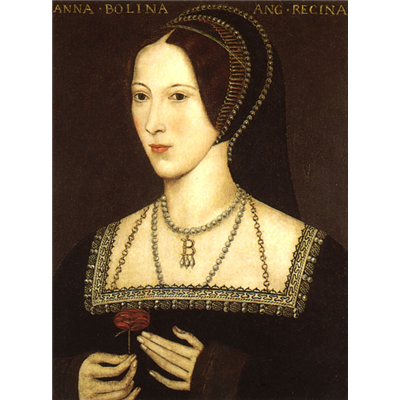 |
Throughout history, jewels have been viewed as the ultimate symbol of wealth and power: a visual statement of portable riches, and a vital part of the projection of majesty. This was particularly important in the 16th century, as it was an age when outward display was of the utmost importance. Nowhere is this more apparent than in the instances of the six wives of Henry VIII. This talk will investigate the jewellery collections of these extraordinary women, as well as exploring the ways in which they wore and used jewels in varying contexts. In so doing, a fascinating new dimension to the famous Tudor queens is revealed. Dr Nicola Tallis has a first class BA (Hons) in History from Bath Spa University, and an MA in Public History from Royal Holloway College, University of London. She received her PhD at the University of Winchester, where her thesis examined the jewellery collections of the queens of England between 1445 and 1548. Nicola has been passionate about English history all of her life, and has worked as a curator, lecturer, and historical researcher. She is currently the resident historian for Alison Weir Tours. She is a regular contributor to historical magazines, and has also featured prominently on BBC’s Countryfile, Who Do You Think You Are?, and Frankie Boyle’s Farewell to the Monarchy. She is the author of five books about the Tudor period. Posthumous portrait of Anne Boleyn at Hever Castle, c. 1583
English School, Public domain, via Wikimedia Commons |
|
| Wednesday, 21 April 2027 |
| Persepolis:
Art, Architecture and Ideology of the Persian Empire |
| James Renshaw |
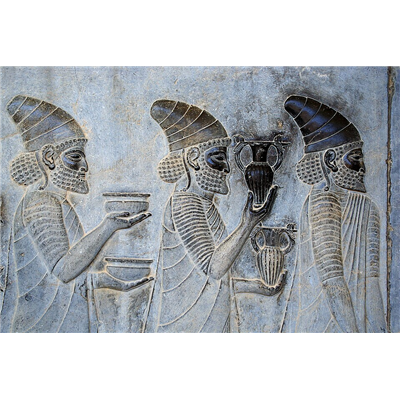 |
The Persian empire exploded into life during the middle of the 6th century BC and was the largest empire in the world for the next two centuries. It stretched from the Mediterranean in the west to the Indus valley in the east, from the Eurasian steppes in the north to Egypt and Arabia in the south. In around 515 BC, its third Great King, Darius I, commissioned the building of a new city, Persepolis, with his palace at its centre. We know a great deal about this palace, and one of its central features, the Apadana Staircase, can be seen in replica in the British Museum. What can this palace and its art tell us about the ideology of this extraordinary and influential empire? James Renshaw last visited us in April 2025 to talk about Pompeii and Herculaneum.He writes: "Following a degree in Classics from Oxford University, I have taught Classics at secondary school level since 1998, most recently at the Godolphin and Latymer in London; here I ran the school’s Ancient World Breakfast Club, which has an ethos similar to that of The Arts Society. Since 1998, I have published a number of textbooks related to the classical world, including In Search of the Greeks and In Search of the Romans. In addition to my school teaching, I have also lectured for the V&A Academy, most recently on its Art and the City: Antiquity to Renaissance course. I have also been a Council Member for the Hellenic Society and the Roman Society. I am a keen traveller, and am lucky enough to have taken many photos of ancient sites, a number of which have been used in my books. I am currently working on a book due out in 2027 on the history of the marathon race. The Marathon: an Epic History seeks to chart how stories from the battle of Marathon in 490 BC led to a new 'marathon' event at the first modern Olympics in 1896, and how this event has gone on to become a sporting craze." Detail of a relief of the eastern stairs of the Apadana at Persepolis
Phillip Maiwald (Nikopol), CC BY-SA 3.0, via Wikimedia Commons |
|
| Wednesday, 19 May 2027 |
| 2027: Thirty Years On from The Royal Academy's 'Sensation' Exhibition |
| Pamela Campbell-Johnston |
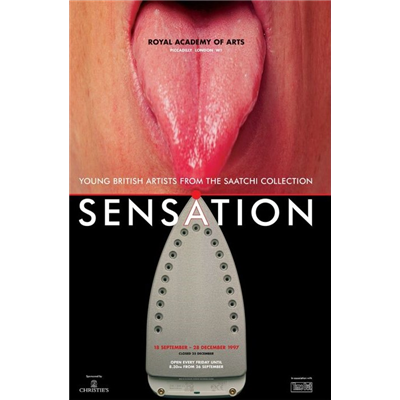 |
In 1997, the Royal Academy of Arts took the world by storm by curating an exhibition of contemporary art. The very first of its kind and the Main Galleries of Burlington House were transformed for this landmark show, 'Sensation'. Apart from launching the careers of many Young British Artists (the 'YBAs'), the exhibition also gathered much controversy. Many of the works were owned by the advertising mogul, Charles Saatchi and this lecture will assess the impact of this exhibition, the artists and their works. How did 'Sensation' launch contemporary art into the mainstream? What has it meant for the careers of certain YBAs? Many of these artists are now household names - Tracey Emin, Damien Hirst, Marcus Harvey, the Chapman Brothers and Rachel Whiteread.
Our lecturer was working at at the Royal Academy and with her colleagues had to navigate her way around the controversy; the vandalism of certain works; the resignation of some Royal Academicians and the actual understanding of what this exhibition and its works were all about. This lecture will not only reveal, first hand, aspects of 'behind-the-scenes' but will also review signature pieces from the exhibition. We will consider the global position of the RA at a time when the artistic image of Great Britain was 'Cool Britannia'.
So come and celebrate thirty years on from the exhibition and understand its seminal impact. (The lecture will be sensitively designed, but please be aware that the subject matter of a selection works may be viewed by some as 'shocking or 'upsetting'). Pamela Campbell-Johnston: MA Hons Art History, St Andrew's University. Over 30 years of lecturing experience to undergraduates, adult groups, and to Friends and Patrons of the Royal Academy of Arts as part of the Adult Education Department's programme of events. Also conducted numerous guided tours and focused gallery talks on individual works of art. Specialises in British Domestic Architecture and Modern British Art. Work experience also undertaken at Bonhams, Art Loss Register, National Trust. Now a freelance art consultant and lecturer. Pamela has worked at the Royal Academy for over 12 years and will share some behind the scenes stories as well as what is written in history books. She will give participants a well-rounded but also in-depth knowledge of the RA, Britain’s oldest and privately funded fine arts institution. Poster for the 1997 "Sensation" exhibition courtesy of the Royal Academy |
|
| Wednesday, 16 June 2027 |
| Keeping House for Bloomsbury:
Grace Higgens of Charleston |
| Tessa Boase |
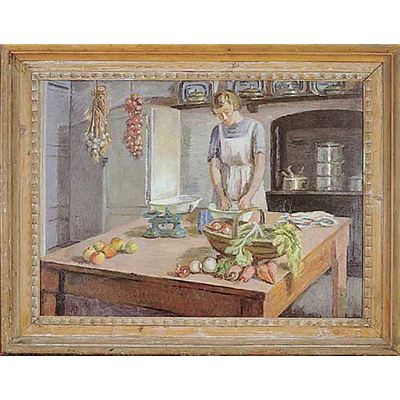 |
Grace Higgens joined the unconventional Bell household in 1920 aged 15 – and, for the next fifty years, propped up the ‘Bloomsbury Set’ in London and at Charleston. Vanessa Bell couldn’t live without her housekeeper’s cooking – or her regular posing as an artist's model. Virginia Woolf tried to poach her for her baking. Grace’s candid diaries paint a picture of bohemia rather different from the official narrative. Tessa Boase told us about Fashion, Feathers & Fury in November 2024.
She is a freelance journalist, author of three books of social history, lecturer and campaigner with an interest in uncovering the stories of invisible women from the 19th and early 20th-centuries – revealing how they drove industry, propped up society and influenced politics.
Since uncovering the feminist origins of the RSPB, Tessa has been campaigning for public recognition of its female founders with plaques, portraits and a statue. Vanessa Bell’s painting of Grace Higgens, Collection of Charleston |
|